Prologue
Before the answer,
there is a question.
Every heart carries questions of meaning, truth, and eternity. At the centre of this story stands Jesus Christ.
Begin the story“He has set eternity in the human heart.”Ecclesiastes 3:11
Chapter I
Every heart asks.
Perhaps you have heard the name of Jesus all your life, yet still wonder who He really is or why His death should matter to you. The story that follows answers four questions at the heart of the Gospel.
Who is Jesus, really?
Why did He have to die?
Why do I need Him?
What does it mean to follow Him?
The answer begins with why we need Him.
Most of us think of ourselves as good people. But measured against what? Scripture gives us God’s moral standard in the Ten Commandments. Have we told a lie? Have we ever taken something that was not ours? Have we used God’s name carelessly or dishonourably? Jesus went deeper still: He taught that looking at another person with lust is adultery in the heart (Matthew 5:27–28). God’s standard reaches not only to what we do, but to what is within us.
“For all have sinned and fall short of the glory of God.”Romans 3:23
By that standard, none of us is innocent. We have sinned, and later good deeds cannot erase what has already been done. We need more than better advice. We need to be forgiven and made right with God.
God is perfectly loving, but He is also perfectly just. A good judge cannot pretend genuine guilt does not matter. So how can a perfectly just God show mercy to guilty people whom He loves?
This is why Jesus came.
“God shows his love for us in that while we were still sinners, Christ died for us.”Romans 5:8

Galilee · where the question became a person
Chapter II
The Word became flesh.
Christianity does not begin with a system, a building, or a denomination. It begins with Jesus Christ.
God did not leave us to solve our guilt by ourselves. The Son of God entered His own creation. Jesus is not merely a teacher, prophet, or religious founder. Scripture presents Him as the eternal Word through whom all things were made. He is the Son who entered our history, shared our humanity, and made the Father known.
“In the beginning was the Word, and the Word was with God, and the Word was God.”John 1:1
He welcomed the overlooked, confronted hypocrisy, forgave sin, and lived without the guilt that belongs to us. He did not come merely to show us how to live. He came to save us, to do what we could never do for ourselves.
“The Word became flesh and made his dwelling among us.”John 1:14
Chapter III
Love, carried
to the cross.
At the cross, God’s justice and God’s love meet.
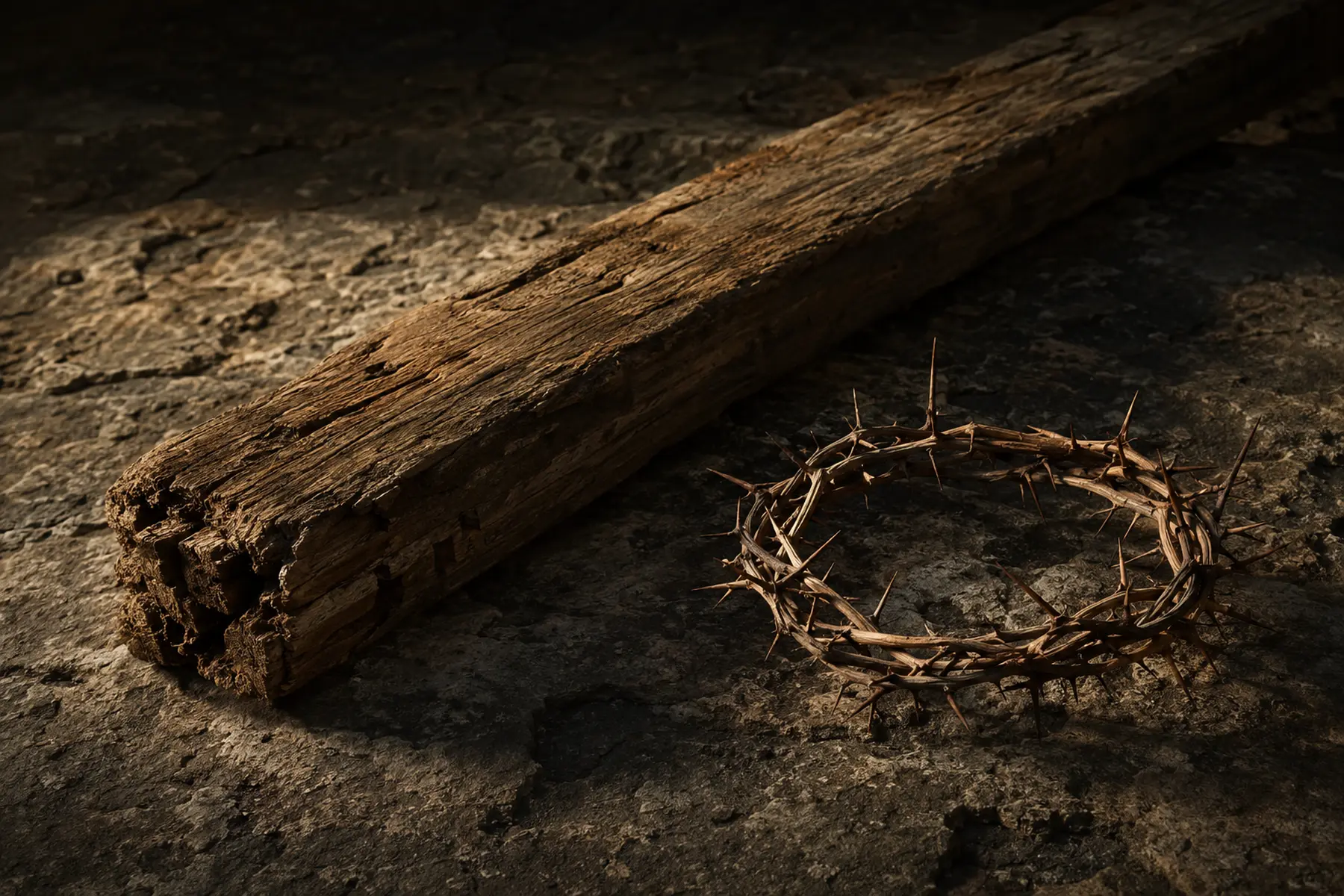
Our guilt is real, and we cannot erase it or make ourselves right with God by collecting enough good deeds. A genuine penalty stands against us, one that justice cannot simply ignore and that we cannot pay for ourselves.
But Jesus willingly took the place of sinners. Like someone stepping forward to pay a debt the guilty person cannot pay, He gave Himself for us. The law was not ignored; our guilt was dealt with. Jesus was not defeated or forced to the cross. He chose to lay down His life so that forgiveness and reconciliation with God could be offered freely.
“God demonstrates his own love for us in this: While we were still sinners, Christ died for us.”Romans 5:8
Chapter IV
The morning
everything changed.
The cross was not the end of the story.
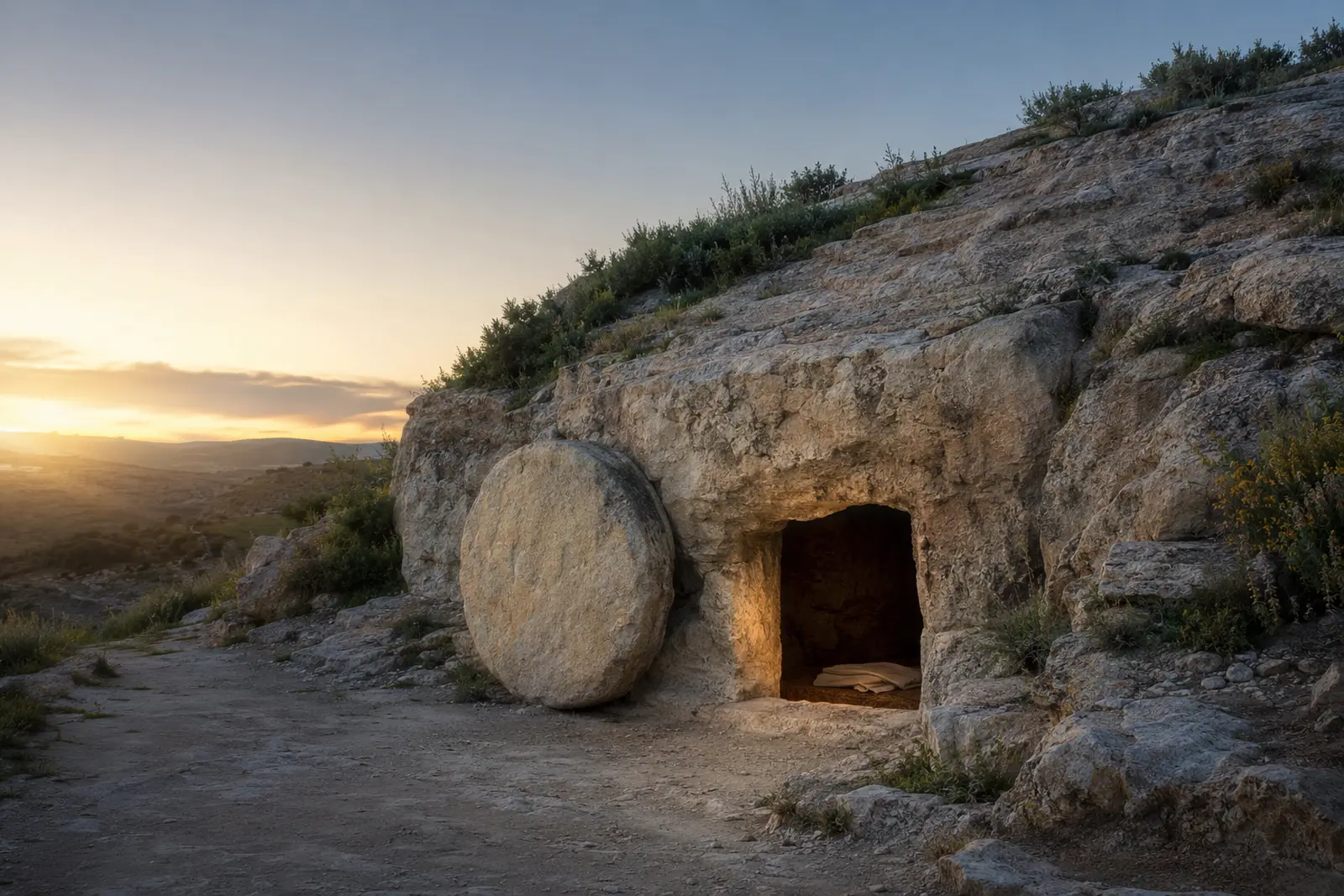
On the third day, the tomb was empty. Jesus rose bodily from the dead and appeared to His followers. The One who gave Himself for sinners conquered death.
Christianity is not merely an invitation to remember the teachings of someone who died two thousand years ago. Jesus Christ died and rose again. His resurrection confirms who He is and that His saving work was not a failed sacrifice. Death does not have the final word, and forgiveness is truly offered in Him.
“I am the resurrection and the life. The one who believes in me will live, even though they die.”John 11:25
Chapter V
And now, the question is yours.
Jesus is alive. The question is no longer simply what you think of Him, but whether you will trust Him and follow Him.
Salvation is not a reward for becoming good enough. We cannot earn it by making our good deeds outweigh our sins. Our hope is not our morality, religious effort, or reputation. Our hope is Jesus Christ.
“I am the way and the truth and the life. No one comes to the Father except through me.”John 14:6
God calls us to repent and believe the Gospel. To repent is to recognise our sin for what it is, turn away from it, and turn toward God. This is a change of mind and heart that begins to change the direction of our lives.
Faith is more than believing that Jesus existed. It is placing our confidence in who He is and in what He accomplished through His death and resurrection. It is no longer saying, “I am good enough,” but “My hope is in Jesus Christ.”
We do not change our lives in order to earn salvation. But genuinely turning to Christ means we cannot intend to continue living exactly as before. Jesus calls us to follow Him: to know Him through Scripture, speak honestly with Him in prayer, turn from sin, learn obedience, love others, and share life with faithful Christians. These things do not purchase forgiveness. They are the beginning of a life changed by Christ.
If you want to speak to God, you do not need polished words.
“Lord Jesus, I know that I have sinned and cannot save myself. I believe You died for sinners and rose again. I turn to You now. Forgive me, change me, and teach me to follow You.”
Chapter VI
Continue Exploring.
A thoughtful faith does not fear careful questions. Begin with Scripture. Examine the claims. Take the next chapter slowly.
Begin with the whole story, then follow each question as the Library grows. The Gospel of John remains a beautiful place to meet Jesus for yourself.