
01The promise before the river
The promise of a clean heart.
Why does the story begin with washing?
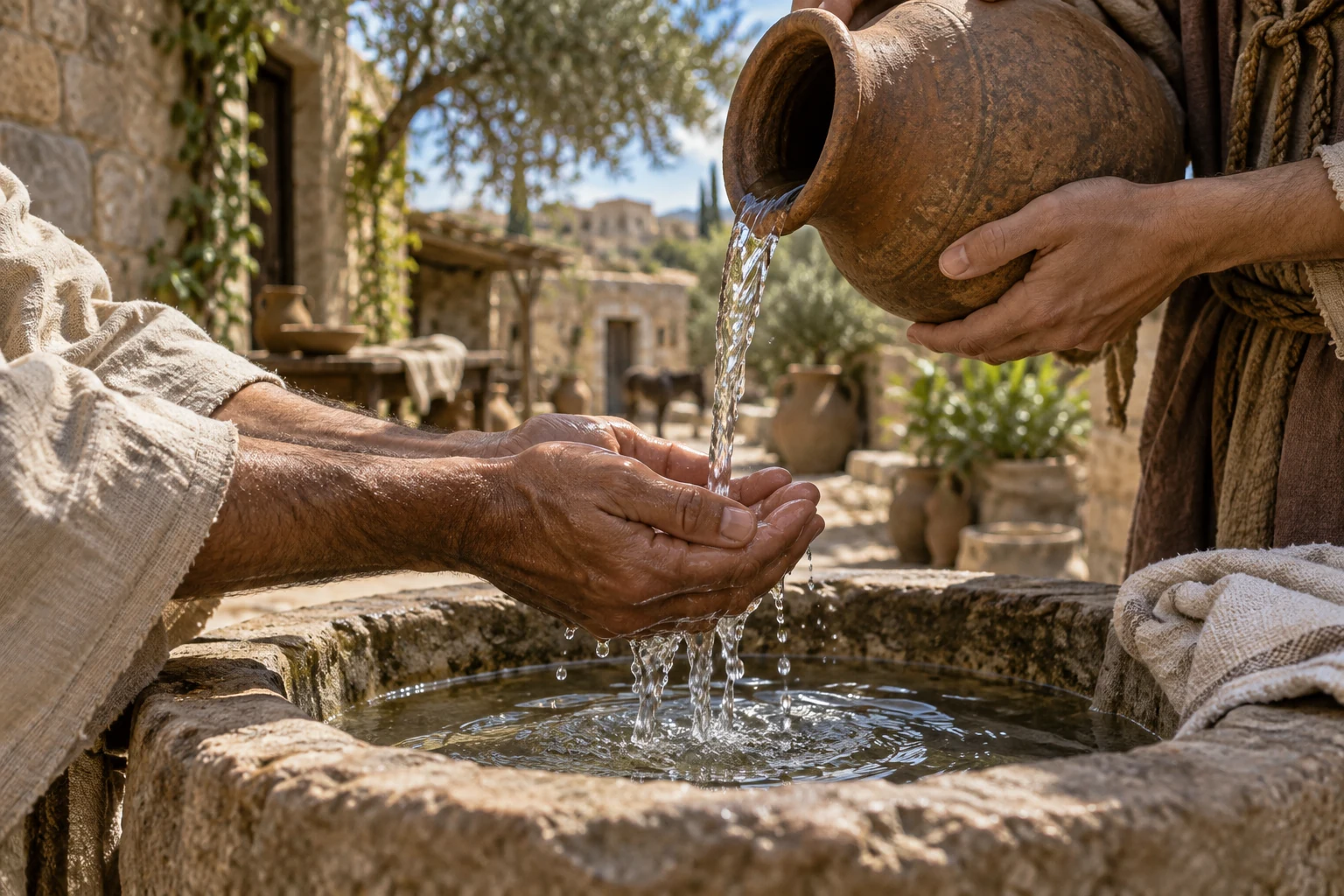
Long before John stood in the Jordan, water belonged to Israel’s life with God. Priests washed before serving. People washed as they returned from ritual uncleanness to the community’s worship. These were meaningful practices under God’s covenant.
Ritual uncleanness did not always mean someone had done wrong. Ordinary bodily conditions or contact with death could make a person unclean. And an outwardly clean person could still have a heart turned away from God.
Through Ezekiel, God promised something deeper. He would cleanse His people from their idols, give them a new heart and put His Spirit within them. The people who had turned away would be renewed by the God who called them back.
These ancient washings were not Christian baptism. They prepare us to understand the language of cleansing and the promise of new life. That promise brings us to the Jordan.
What the older washings can, and cannot, tell us
God appointed physical actions within Israel’s covenant life. Their significance should not be dismissed. But we cannot transfer every rule about those washings into Christian baptism. Ezekiel joins cleansing, a new heart and God’s Spirit without specifying a later ceremony’s administration or timing.
Joel promises the Spirit’s outpouring across age and social distinctions. Peter will return to that promise at Pentecost. The continuity is God’s cleansing and life-giving work, not an identical rite in every biblical period.
02John prepares the way for Jesus
At the Jordan.
Who was John preparing people to meet?
John calls people to turn toward God. They confess their sins and receive his baptism in water. Repentance is meant to bear fruit: generosity, honesty and a changed way of treating others.
Yet John directs their attention beyond himself. He baptizes with water; the One coming after him will baptize with the Holy Spirit. John prepares the way. Jesus gives what John cannot.
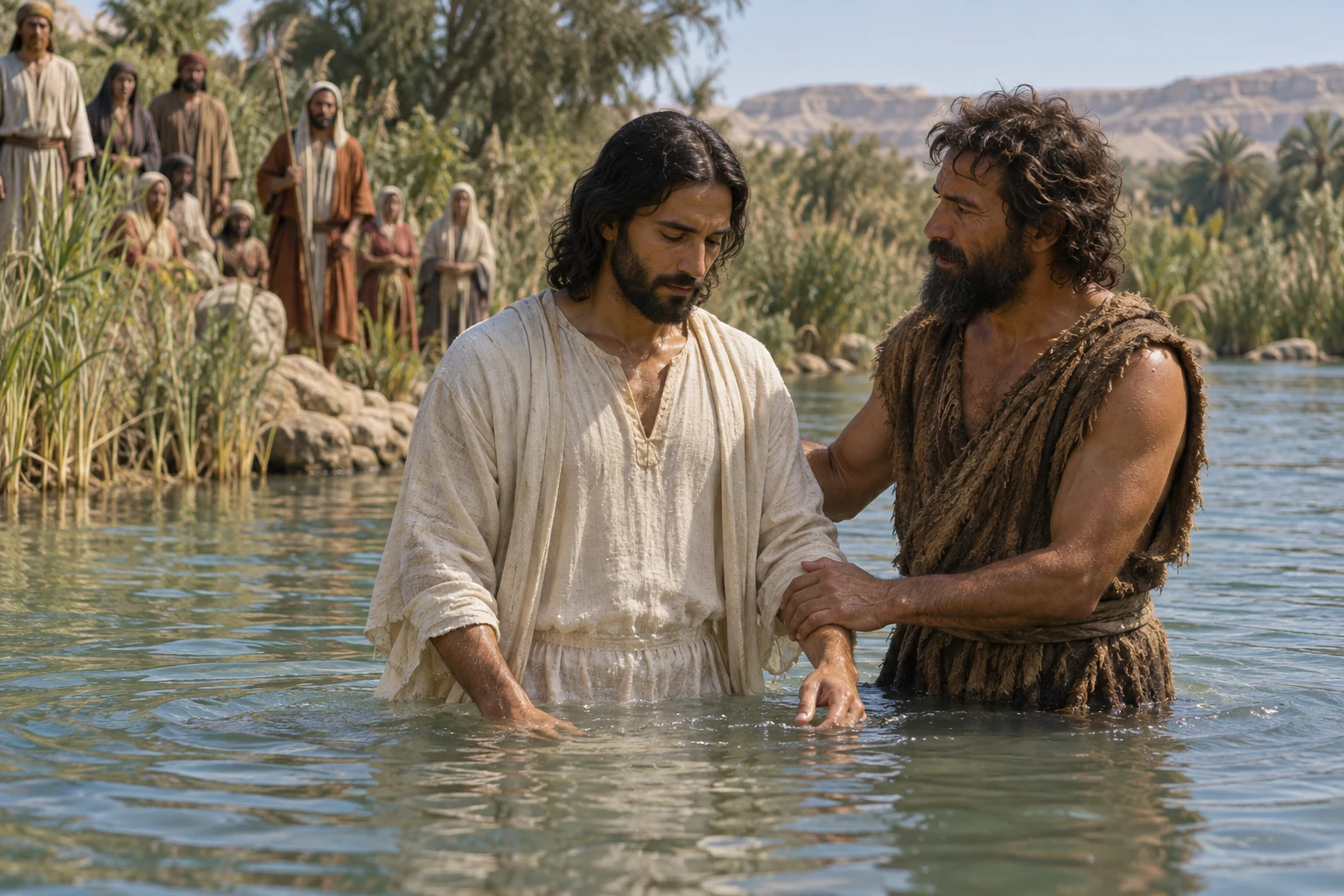
Then Jesus comes to be baptized. John objects, but Jesus explains that this is fitting to fulfil all righteousness. He is carrying out God’s righteous purpose. He takes His place among the people He has come to save, as His identity and mission are made known.
Jesus is not confessing sins of His own. He does not become God’s Son by entering the water. The Father’s declaration and the Spirit’s descent reveal the Son as His public ministry begins.
Later, Jesus tells Nicodemus that entering God’s kingdom requires birth from water and the Spirit. God’s promised cleansing and renewal help us understand His words. We need life from above, which the Spirit gives.
Christians differ over how directly this saying refers to baptism. Ezekiel’s promise is a strong background, and a baptismal connection remains credible. In the same conversation, Jesus directs us to believe in the Son who will be lifted up for us.
Water and Spirit in John 3
One reading understands Christian baptism as the setting in which God gives new birth. Another emphasizes Ezekiel’s promised cleansing and Spirit renewal. These need not exclude each other: prophetic renewal could be understood as finding expression in baptism.
The idea that “water” means natural birth is less persuasive in the audit; the required ancient idiom is not established. Connections with John’s baptism or cleansing by God’s word are also proposed, but the verse does not explicitly identify either. The central necessity is Spirit-given new birth. The exact relationship to the water ceremony remains disputed.
Does baptism always mean water?
No. Context identifies what is meant. John administers water; Jesus promises the Spirit. Jesus also describes His coming suffering as a baptism in Mark 10:38–39 (ESV, opens in a new tab). Paul uses baptism language for Israel’s passage under Moses in 1 Corinthians 10:1–5 (ESV, opens in a new tab).
Equally, we should not remove water from a difficult passage simply to solve a theological problem. Some passages describe Christian baptism and its spiritual reality together. John’s warning about fire must also be read with the judgment imagery in Matthew 3:11–12 (ESV, opens in a new tab); it is not automatically a promise of a pleasant spiritual experience.
03Baptizing and making disciples
The risen Lord sends His people.
Why do Christians baptize?
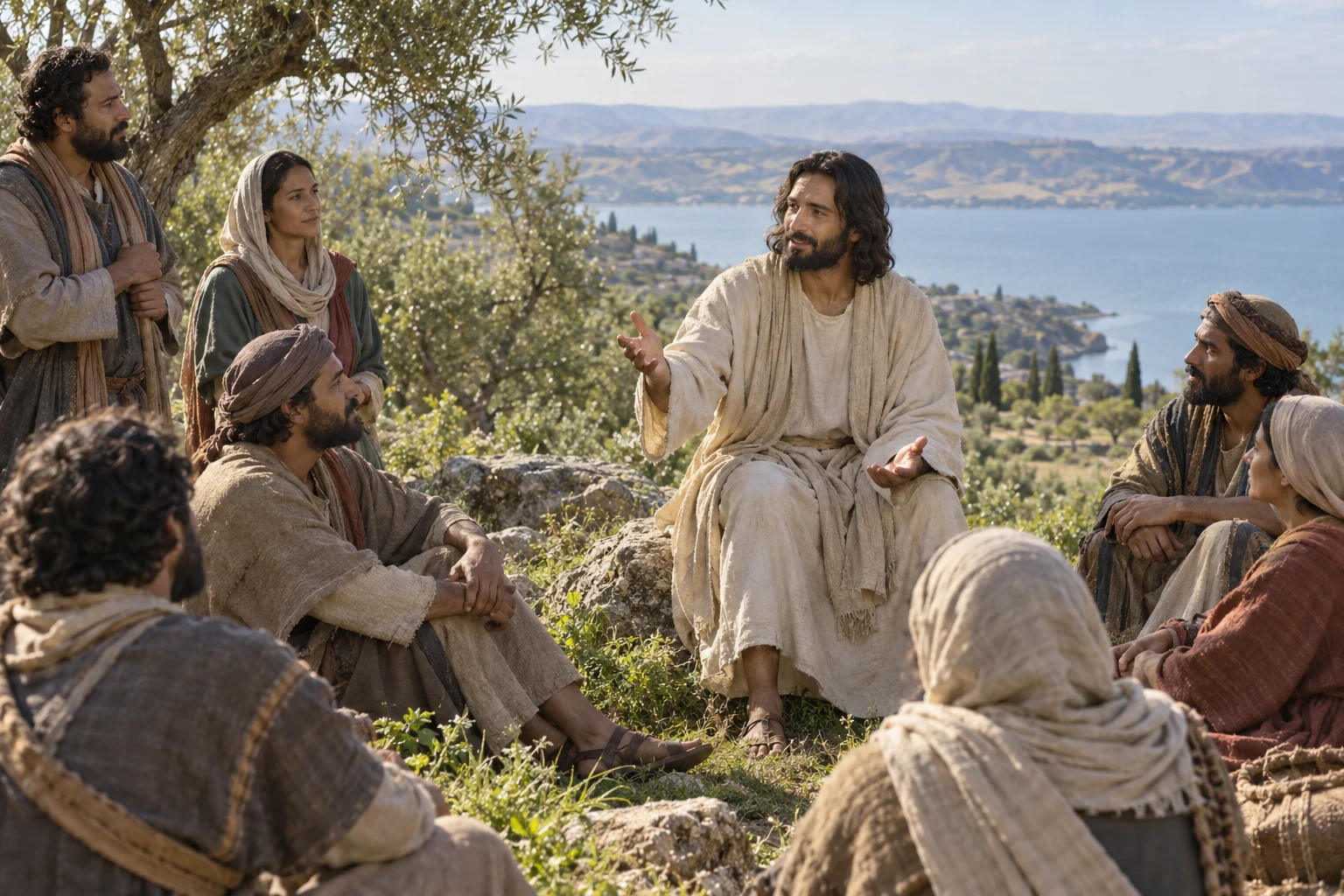
The One who entered the Jordan goes on to give His life for sinners. Jesus dies and rises again. Christian baptism now looks to Him as the crucified and living Lord.
Before sending His disciples to the nations, Jesus declares His authority. They are to make disciples, baptizing them in the name of the Father, Son and Holy Spirit, and teaching them to obey everything He commanded.
We do not simply repeat Jesus’ own baptism for the same reason He received it. His mission was unique. Our obligation rests on His command and the practice of His apostles.
A command to disciples does not, by itself, tell us the exact moment God first accepts a sinner. To see how baptism, faith and the Spirit belong together, we need to follow the message into the lives of those who heard it.
04Pentecost and Samaria
What shall we do?
How did the first hearers respond?
At Pentecost, the promised Spirit comes. Peter stands before the gathered people and announces Jesus’ death, resurrection and exaltation. The hearers are cut to the heart. They ask what they should do.
Peter calls them to repent and be baptized in Jesus’ name for the forgiveness of their sins, and promises the gift of the Holy Spirit. Those who receive the message are baptized that day and share in the life of the believers.
“Repent and be baptized every one of you in the name of Jesus Christ for the forgiveness of your sins”
Acts 2:38 (ESV, opens in a new tab) · ESV
We should let those words carry their full weight. Peter brings repentance, baptism, forgiveness and the Spirit closely together. Baptism is part of the response to the gospel, not a decorative afterthought.
Then the message reaches Samaria.
People believe Philip’s proclamation and are baptized. Yet Luke says the Spirit has not fallen on them. Peter and John come, pray and lay hands on them; they receive the Spirit.
This delay must remain part of the story. Perhaps this exceptional moment visibly united Samaritan and Jerusalem believers. Others understand it through a distinction involving empowerment or the role of apostolic hands. Luke does not explicitly tell us why it happened in this order.
We should neither dismiss their belief nor make their sequence a rule for everyone. In another household, God is about to act in a different order.
Look CloserActs 2:38
εἰς ἄφεσιν
eis aphesin
for / toward forgiveness
Here the phrase looks toward forgiveness; “because your sins were already forgiven” is a weak contextual reading. It closely connects baptism and repentance with forgiveness, without the preposition alone explaining precisely how God grants it.
Read the passage in context (ESV, opens in a new tab)Reading Pentecost and Samaria without forcing an order
Acts 2:38 can be read as baptism being God’s appointed means of giving grace, or as the act embodying the whole repentant response. Neither explanation should change “for forgiveness” into a mere announcement of past forgiveness. The shift from “repent” addressed to everyone to “each of you” being baptized does not detach baptism from the sentence.
In Samaria, a mission-frontier event securing unity is a plausible explanation, not Luke’s stated reason. Pentecostal readings often distinguish empowerment from the Spirit’s conversion work; they do not necessarily say that ordinary believers are wholly without the Spirit. Sacramental readings emphasize baptism and the subsequent apostolic laying on of hands. Each must also account for Cornelius.
Calling Samaria merely an optional later filling understates Luke’s word “receive.” Simon’s later corrupt response does not establish that every Samaritan’s belief was counterfeit.
05The Spirit before the water
While Peter was still speaking.
Must water always come before the Spirit?
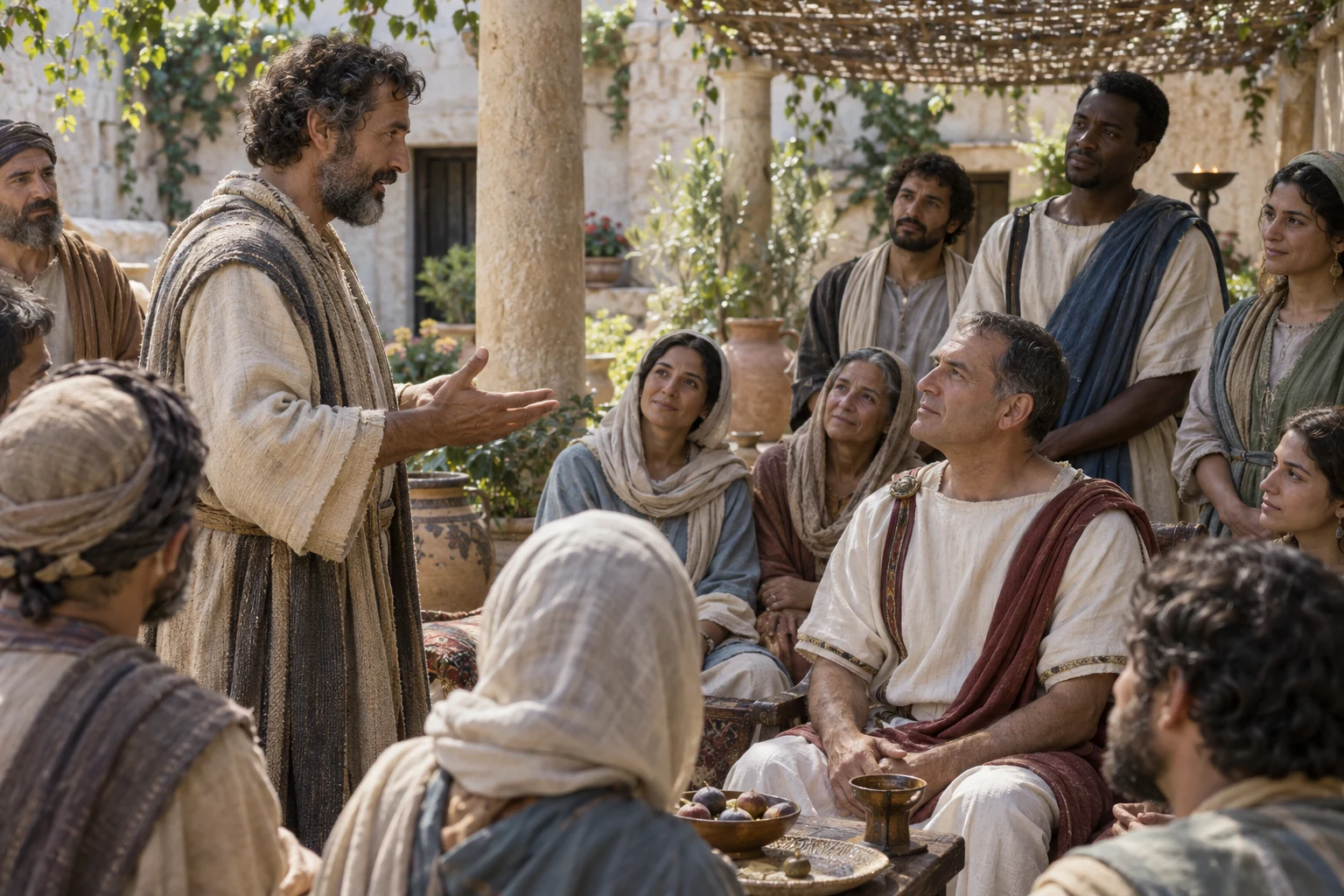
In Cornelius’s house, Peter tells the story of Jesus: His ministry, His death, His resurrection. Forgiveness is offered through His name to everyone who believes in Him.
Before Peter finishes speaking, the Holy Spirit falls on the hearers. The Jewish believers with him are astonished. They hear these Gentiles speaking in tongues and praising God. The gift has come to them too.
Only then does Peter ask whether anyone can withhold water. They have received the same Spirit. He commands them to be baptized in Jesus Christ’s name.
- 01
Christ proclaimed
Forgiveness offered to everyone believing in Him.
Acts 10:43 (ESV, opens in a new tab) - 02
- 03
- 04
Peter later explains this as the fulfilment of Jesus’ promise of baptism with the Spirit. The church recognizes repentance leading to life. Looking back again, Peter says the Gentiles heard and believed, and that God cleansed their hearts by faith.
This is strong evidence of God’s saving acceptance before the ceremony, not merely a dramatic sign with no meaning for the hearers. But it does not settle every question about how God ordinarily works through baptism. It rules out an exceptionless claim that He must always wait for water.
What changes when we read the Acts accounts together?
These are the recorded events, not a timetable imposed on every believer. Where Luke does not give a time, we should not supply one.
| Account | What Luke records | What remains open |
|---|---|---|
| Pentecost hearers (ESV, opens in a new tab) | Repentance and baptism commanded; forgiveness and the Spirit promised; those receiving the word baptized. | Individual moments of Spirit reception are not narrated. The earlier tongues scene is not automatically a description of all 3,000. |
| Samaria (ESV, opens in a new tab) | Belief, water baptism, then reception of the Spirit through apostolic prayer and hands. | The delay is explicit; its purpose is not explicitly explained. |
| Cornelius (ESV, opens in a new tab) | The Spirit arrives during preaching; recognition and the water command follow. | The order is clear. It does not disprove every account of baptism as an ordinary means of grace. |
| Ephesus (ESV, opens in a new tab) | People with John’s baptism hear about faith in Jesus, receive Christian baptism, then the Spirit with Paul’s laying on of hands. | Their prior Christian status is disputed. This does not establish a universal second stage or settle every rebaptism question. |
John’s preparatory baptism and Christian baptism are distinguishable. Acts 19’s particular situation cannot be transferred automatically to someone asking about an earlier Christian baptism today.
What can we confidently say about Cornelius?
The Spirit-before-water order is directly stated. Acts 11 identifies the gift with the promised Spirit baptism. Acts 15 interprets the Gentiles’ response through believing and God’s cleansing of their hearts by faith.
Taken together, these give very strong evidence of saving acceptance before water. Luke does not write a separate sentence saying “Cornelius was justified before baptism.” That conclusion draws on his own interpretation of the event.
A sacramental account that allows God to give grace before the rite can accommodate Cornelius. An account that says no one can receive the Spirit before water cannot. Peter’s subsequent command also prevents us from treating baptism as optional once the Spirit has come.
06Hearing, believing and belonging
The Spirit of the One we trust.
When do we receive the Holy Spirit?
What happened in Cornelius’s house helps us hear Paul’s teaching. Writing to the Ephesians, he recalls their hearing the gospel, believing in Christ and being sealed with the promised Holy Spirit. The Spirit marks their belonging to God and is the pledge of their coming inheritance.
These belong closely together. Paul does not insert a later water ceremony as a missing qualification that leaves a genuine believer without the Spirit. Nor does his wording measure the seconds between faith and sealing.
He asks the Galatians how they received the Spirit: through works of the law, or hearing with faith? His answer places the promised gift in Christ’s redeeming work, received through faith.
Romans makes the connection personal. Anyone without Christ’s Spirit does not belong to Him. The Spirit is part of what it means to be Christ’s, not a prize for a spiritually superior few.
And this belonging is shared. In one Spirit, believers are baptized into one body. Jewish and Greek, enslaved and free, they share in the same Spirit. Water’s precise role in this verse is debated; the common Spirit and the one body are clear.
You do not need to reconstruct a dramatic sensation to trust Christ’s promise. Later filling, empowerment and different gifts belong to Christian life, but they should not be confused with the claim that an ordinary believer is wholly without His Spirit.
Look CloserEphesians 1:13
πιστεύσαντες
pisteusantes
having believed / when you believed
From pisteuō, to believe or trust: believing is the response connected with being sealed. The wording does not establish a measurable delay or an extra water requirement, and it does not deny baptism’s close place in the believers’ conversion.
Read the passage in context (ESV, opens in a new tab)Look Closer1 Corinthians 12:13
ἐν ἑνὶ πνεύματι
en heni pneumati
in / by one Spirit
The phrase identifies the shared Spirit in whom and through whom believers belong to one body. Translating it “in” or “by” does not alone settle who administers this baptism or exactly how the water rite relates to it.
Read the passage in context (ESV, opens in a new tab)One Spirit, differing experiences
Paul’s ordinary account links the Spirit with genuine gospel faith and belonging to Christ. This must be held alongside Samaria’s real delay, rather than used to deny Luke’s narrative. Receiving, sealing, baptism, filling and empowerment overlap in some passages without being interchangeable technical terms everywhere.
Repeated filling is clearly described in Acts 4:31 (ESV, opens in a new tab). Christians differ about how to relate later empowerment to Spirit-baptism language. 1 Corinthians 12:27–30 (ESV, opens in a new tab) distinguishes gifts; no reader should be told that failing to reproduce another person’s experience by itself proves the absence of the Spirit.
07His death and His risen life
Into His death. Into new life.
What does water baptism mean?
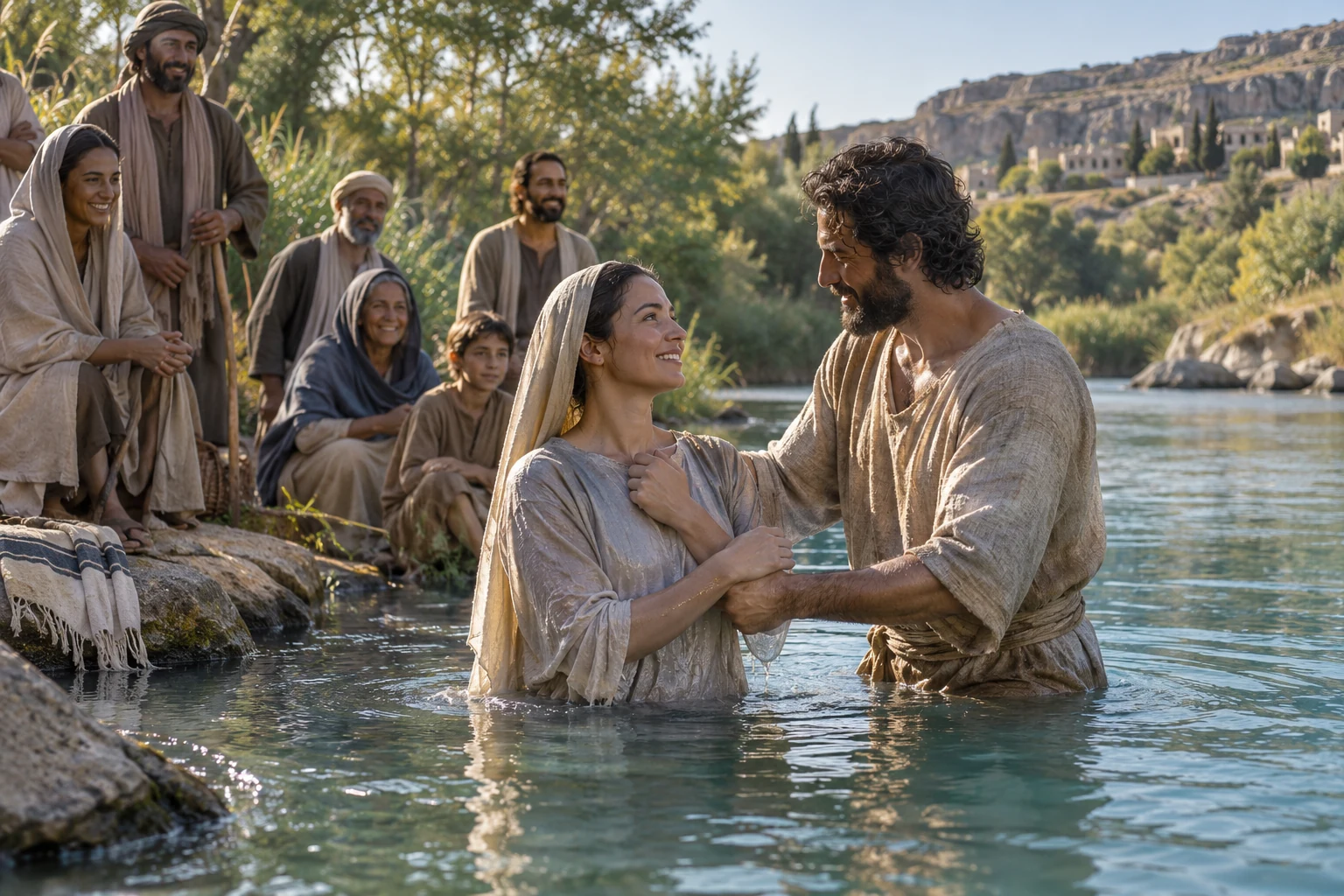
Knowing that God can give the Spirit before water does not leave baptism empty. Jesus appoints a real act in which our allegiance to Him is expressed with our bodies, before God and among His people.
Paul reminds the Romans of their baptism into Christ and His death. He speaks of being buried with Him through baptism and walking in newness of life. His concern is how people joined to the crucified and risen Lord can go on treating sin as their master.
“We were buried therefore with him by baptism into death”
Romans 6:4 (ESV, opens in a new tab) · ESV
To be united with Christ is to belong to Him and share in the benefits of His death and risen life. Baptism’s language reaches into that reality. It is richer than advertising a private decision.
Identification with His death and resurrection.
Cleansing imagery and a Godward response of faith.
Obedience to the Lord whose name we bear.
Visible identification with the fellowship of His people.
Galatians holds together being God’s children through faith and putting on Christ in baptism. Colossians speaks of burial with Him and being raised through faith in God’s working. These are connected descriptions of becoming Christ’s, rather than rival routes to His acceptance.
Read together, these passages most naturally hold the water rite and spiritual reality together within that beginning. The passages do not make water an independent saving power, but their strong wording cannot be reduced to an empty symbol.
Cornelius had already received the Spirit before he was baptized. His story helps us distinguish belonging to Christ from its visible expression in water baptism, while keeping both closely connected.
More than a public declaration
Paul says that we were buried with Christ through baptism. Replacing this with “baptism merely depicts burial” would weaken his wording. A sacramental reading understands God to use the rite as a means of grace. An enacted-faith reading understands baptism as the appointed act intimately joined to the whole believing response and union with Christ.
Both accounts must preserve faith, God’s action and the force of Paul’s language. Neither the absence of the word “water” nor the presence of “baptism” settles every question by itself. The audit favours integrated Christian initiation here, while acknowledging that the rite’s precise efficacy remains disputed.
The “one baptism” in Ephesians 4 serves the unity of the people who share one Lord and faith. It does not erase Scripture’s other uses of baptism language or cancel Peter’s command to baptize those who already received the Spirit.
08Taking the strong words seriously
Cleansed through the living Christ.
Why does Scripture use such strong words?
When Ananias speaks to Saul, he joins baptism, washing away sins and calling on the Lord’s name. We should not pull these apart to protect a simpler explanation. Saul is summoned to a Godward response in which baptism and cleansing belong together.
The words do not describe water acting on its own. Saul calls on Jesus. Nor does the account tell us the precise moment of his forgiveness or Spirit-filling in relation to the ceremony.
Look CloserActs 22:16
ἐπικαλεσάμενος
epikalesamenos
calling upon
Calling on the Lord’s name describes the manner of this connected baptism-and-cleansing response. It does not detach the appeal from baptism or establish that the invocation happened days earlier.
Read the passage in context (ESV, opens in a new tab)Mercy that washes and renews.
Titus says God saved us according to His mercy, through the washing of regeneration and renewal of the Holy Spirit. Regeneration means God’s gift of new life. The Spirit is richly given through Jesus Christ, and we are made right with God by grace.
A baptismal allusion is probable here, although water and baptism are not explicitly named. God’s merciful renewal is clear. The precise relationship between that work and the ceremony remains a matter of interpretation.
Baptism now saves you.
Peter’s words are strong, and we should read the whole sentence. He connects Noah’s deliverance through the flood with baptism, then explains the saving baptism in relation to a good conscience before God and the resurrection of Jesus Christ.
“Baptism, which corresponds to this, now saves you”
1 Peter 3:21 (ESV, opens in a new tab) · ESV
Peter explicitly distinguishes this from removing dirt from the body. He speaks of an appeal to God concerning a good conscience, or, as other translations understand it, a pledge toward God. Either way, the response is directed to Him. The saving ground is Jesus’ resurrection.
This preserves baptism’s real connection with salvation. It does not make bodily washing automatically save an unbelieving person, and it does not make our pledge a payment for forgiveness. Our hope rests in the living Christ.
Look Closer1 Peter 3:21
ἐπερώτημα
eperōtēma
appeal / pledge
The audit slightly favours an appeal to God concerning a good conscience, while “pledge” remains a serious reading. Both preserve Peter’s Godward emphasis; neither makes physical washing or a person’s moral resolve the saving power.
Read the passage in context (ESV, opens in a new tab)How Christians understand Peter’s saving language
A sacramental account sees baptism as an appointed means through which the risen Christ gives grace. An enacted-faith account understands the named baptismal act as embodying the whole response of faith and divine rescue. Both must retain Peter’s actual saving assertion, the conscience’s relation to God and Jesus’ resurrection.
The flood correspondence concerns deliverance through judgment. It does not require every detail of Noah’s story to describe a baptismal mechanism. Peter’s letter also grounds new birth in God’s mercy, the resurrection and the proclaimed word. Those passages illuminate his baptismal statement rather than cancel it.
Mark 16:16 and the longer ending of Mark
“Whoever believes and is baptized will be saved, but whoever does not believe will be condemned.”
Mark 16:16 (ESV, opens in a new tab) · ESV
This verse appears in Mark 16:9–20, the longer ending. Its originality is disputed: some of the earliest manuscripts lack it, while many other witnesses preserve it. The ESV marks the passage and supplies a textual note. Its long Christian use deserves acknowledgment, and the textual question deserves disclosure.
The sentence associates belief and baptism with salvation and expressly identifies unbelief with condemnation. Its first clause should not carry an independent proof that every unbaptized believer is condemned. Nor does the second clause’s silence about baptism independently prove the opposite. Read it alongside the wider evidence, including Acts 10–15.
09Trust Jesus and follow Him
The next faithful step.
What should I do now?
On a road, Philip explains the good news about Jesus to an Ethiopian traveller. When they come to water, the traveller asks to be baptized. In Philippi, a jailer asks how to be saved. Paul and Silas direct him to believe in the Lord Jesus, explain the word to his household, and baptism follows that night.
These accounts show readiness and prompt response. They do not require a new believer to become spiritually impressive before baptism. They also include teaching: we should understand whom we are trusting and what we are doing.
If you are trusting Jesus and have never received Christian water baptism, speak with a Christian community that faithfully teaches the gospel. Seek baptism with sufficient understanding and without unnecessary delay.
Being unable to receive baptism immediately is different from deciding never to obey Christ’s command. Access, health or questions needing careful explanation can cause real delay. Informed, indefinite refusal raises a serious question about discipleship; it does not authorize us to pronounce an individual’s final standing before God.
If you have questions about an earlier baptism
Whether an earlier infant baptism should be recognized is a distinct question about baptism’s recipients and meaning. Christians reach different conclusions, and this Journey’s account of salvation and the Spirit does not settle it automatically.
Discuss your circumstances and the relevant passages carefully. Acts 19 distinguishes John’s preparatory baptism from explicitly Christian baptism; it is not a direct ruling that every disputed earlier Christian baptism must be repeated. The invitation is to willing obedience, not anxiety over an assumed defect in your history.
Carry this with you
Christ is our hope.
How are we saved?
God saves us by grace through faith in Jesus Christ, who died for our sins and rose again. Salvation is God’s gift, not something earned by our works. Water baptism belongs closely to the believer’s response to Christ and is commanded by Him; Christians differ over precisely how God’s grace relates to the act.
When do we receive the Holy Spirit?
Paul connects the Spirit with genuine reception of the gospel in faith and belonging to Christ. Acts records differing sequences. Cornelius makes clear that water baptism is not a universal prerequisite for receiving the Spirit.
Why should we be water baptized?
Jesus commands it. Baptism expresses obedient allegiance to Him, identifies us with His death and resurrection, carries the language of cleansing, and visibly identifies us with the fellowship of His people. Receiving the Spirit does not remove this command.
When should we be water baptized?
Promptly after credible reception of the gospel, with sufficient understanding and practical opportunity. Scripture prescribes no universal waiting period. Necessary delay and deliberate refusal are different; questions about an earlier baptism deserve careful consideration.
Baptism begins a life of learning to obey Jesus. Read His word. Pray. Share life with His people. Turn from sin, love others and depend on His Spirit. These things do not purchase forgiveness. They are the growing expression of a life received from Him.
Trust the One who died and rose for you.
Follow the Lord whose name you bear.